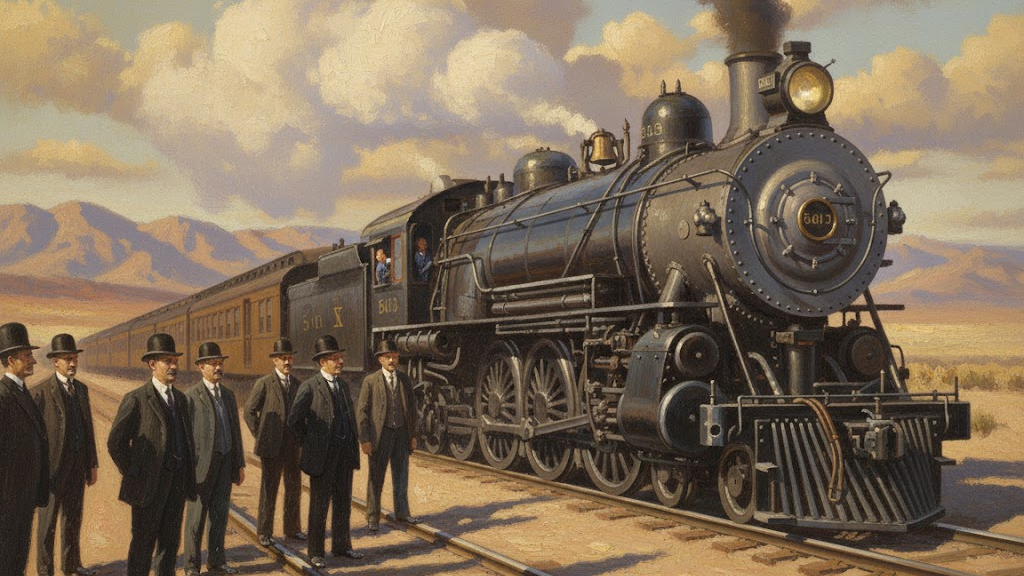
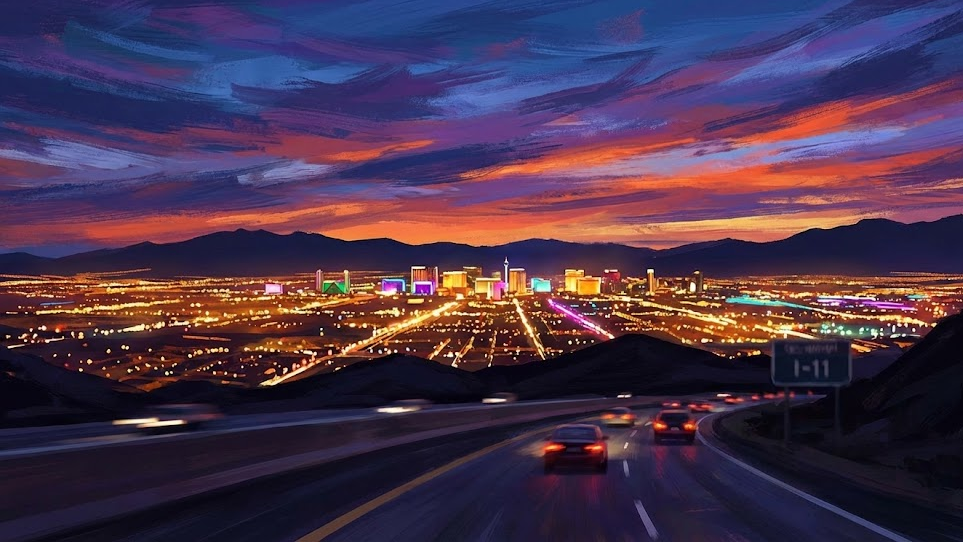
Las Vegas and logistics shaped each other. Freight movement, transportation corridors, and infrastructure built the valley. The valley shaped those systems. The history runs deeper than most people realize. So does the present.
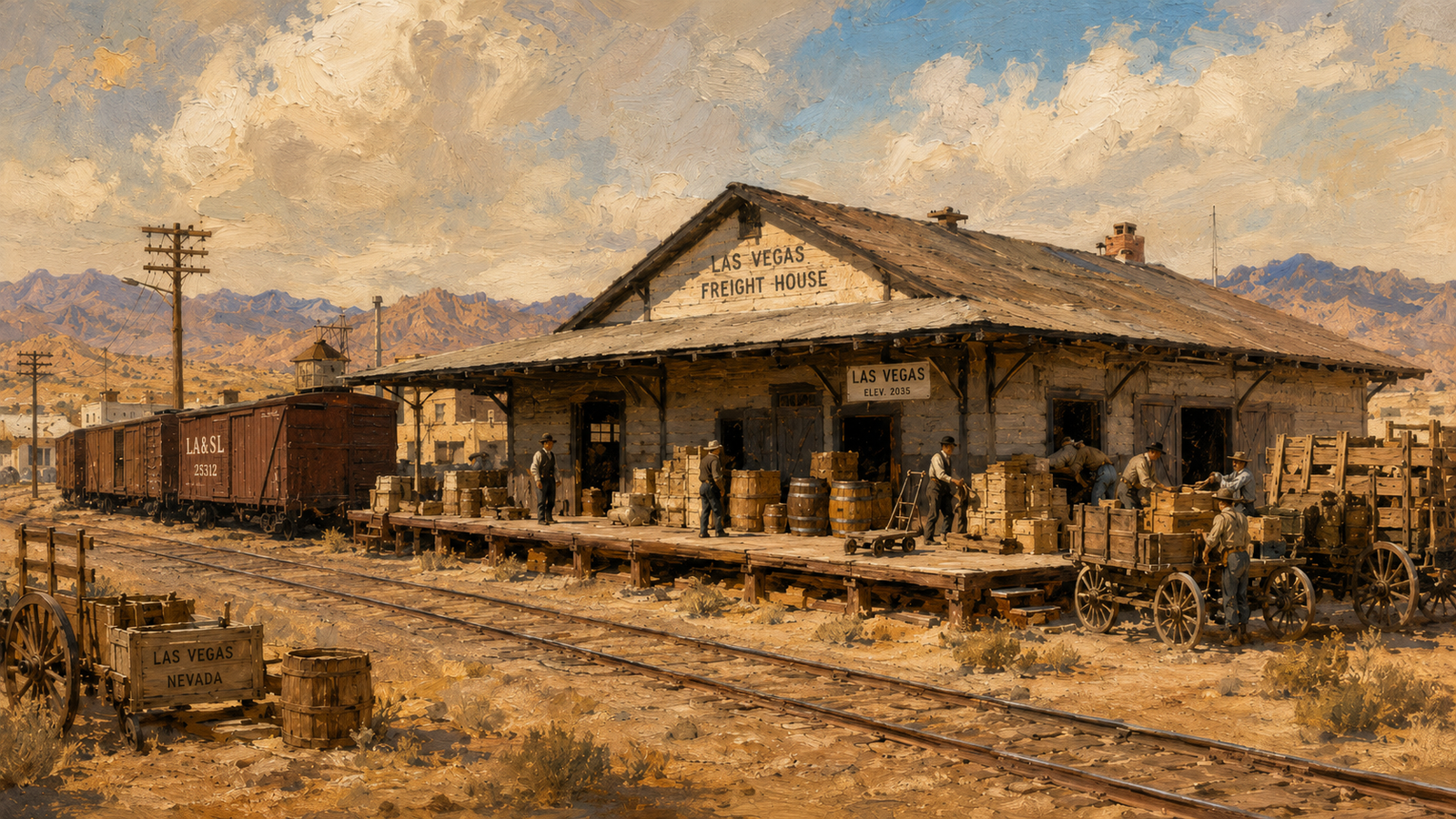
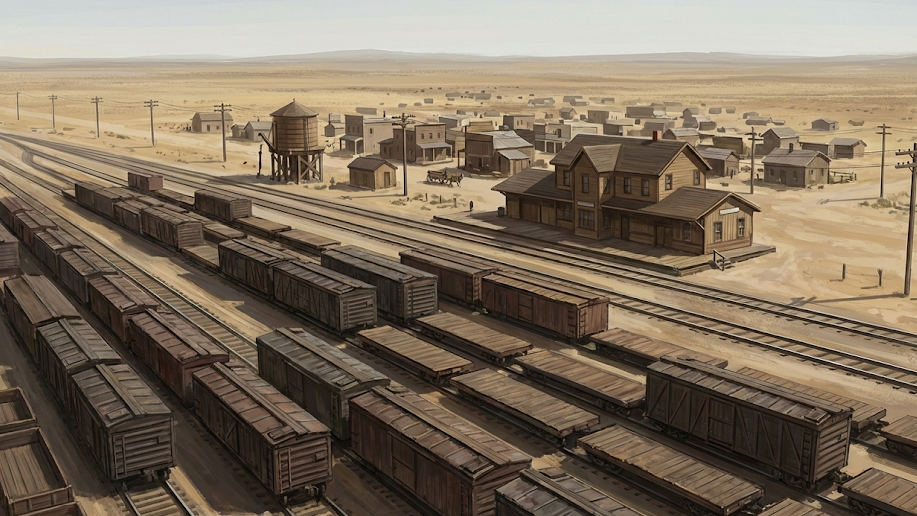
The Las Vegas freight house opened in 1905, before the town had a school or a paved road. It moved goods off the Salt Lake corridor into a desert economy that had no other way to receive them. A single staging point, no redundancy, no alternative. Trucks and highways broke that model. The valley built what came next on its own terms.…
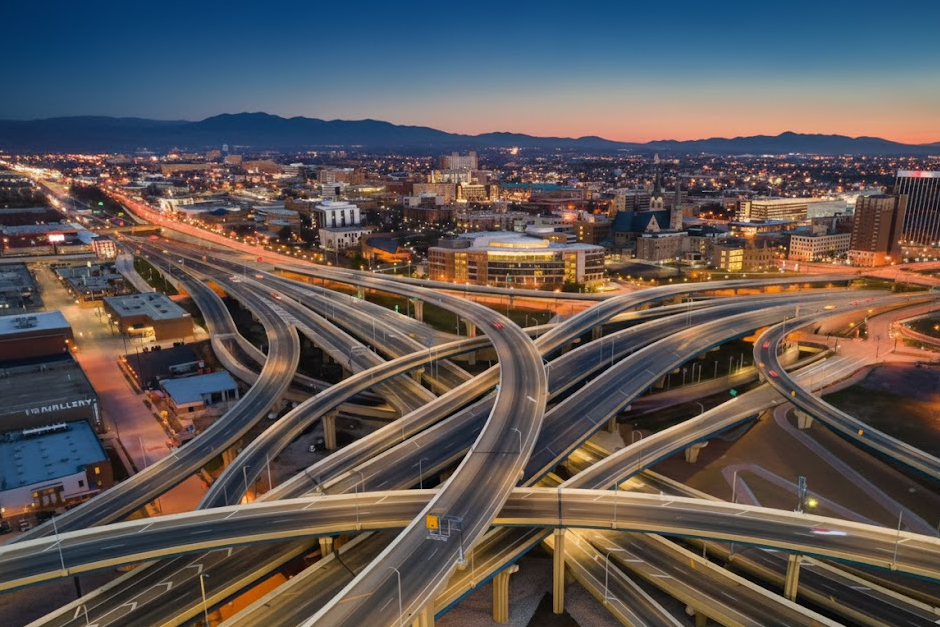
The Spaghetti Bowl sees about 25,000 lane changes per hour. Each one is a freight load, a delivery, or a service call reaching its customer. The weave count is a measure of regional commerce. When the junction works, the valley moves as one connected system. When it breaks, dock windows blow across Southern Nevada.…
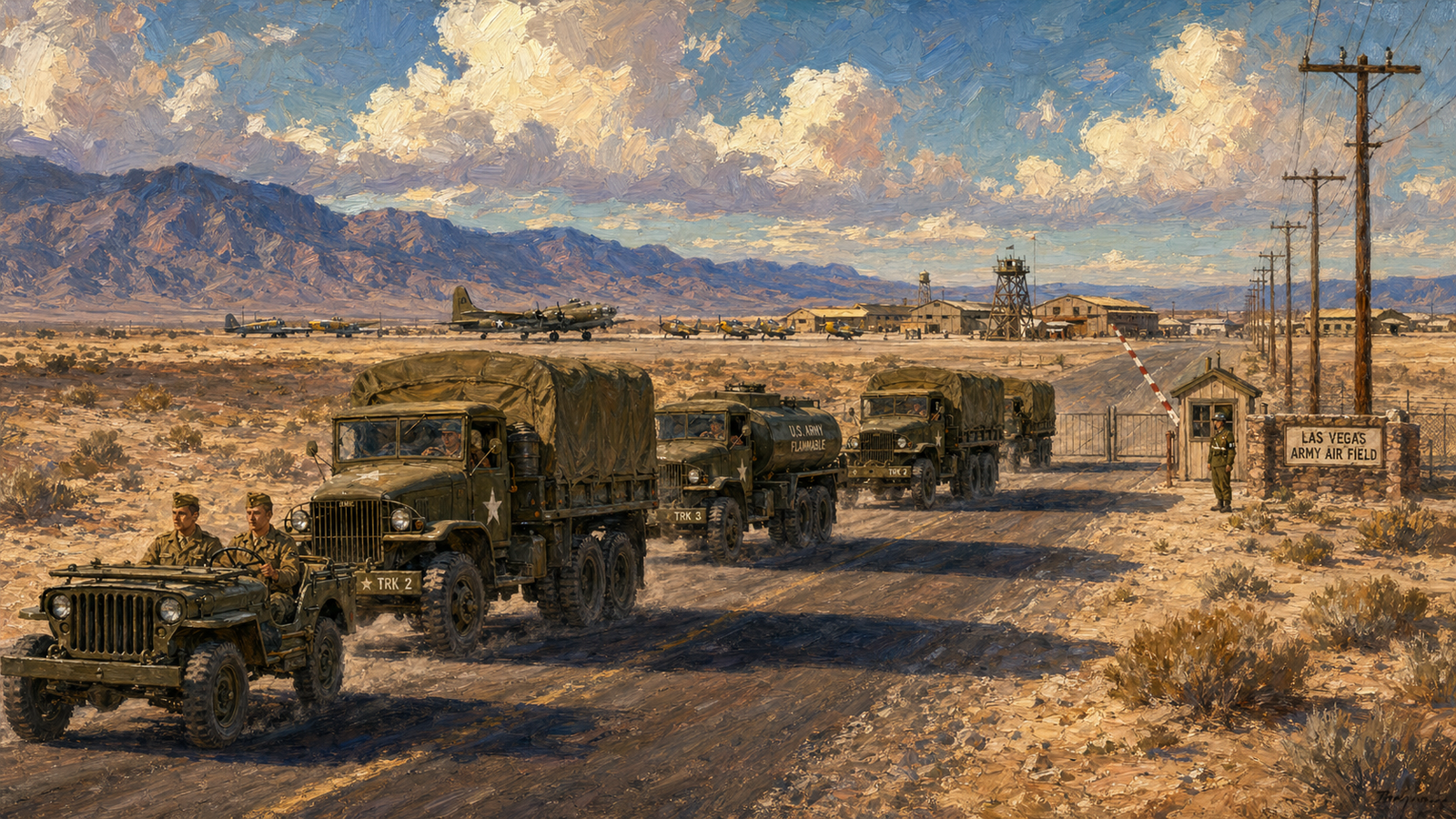
Las Vegas bought a desert airstrip for ten dollars in 1941 and leased it to the Army three days later. The base that became Nellis was built on ground the corridor had already prepared. Rail spurs, US 91, and a service town turned a small airstrip into a working military installation in months.…
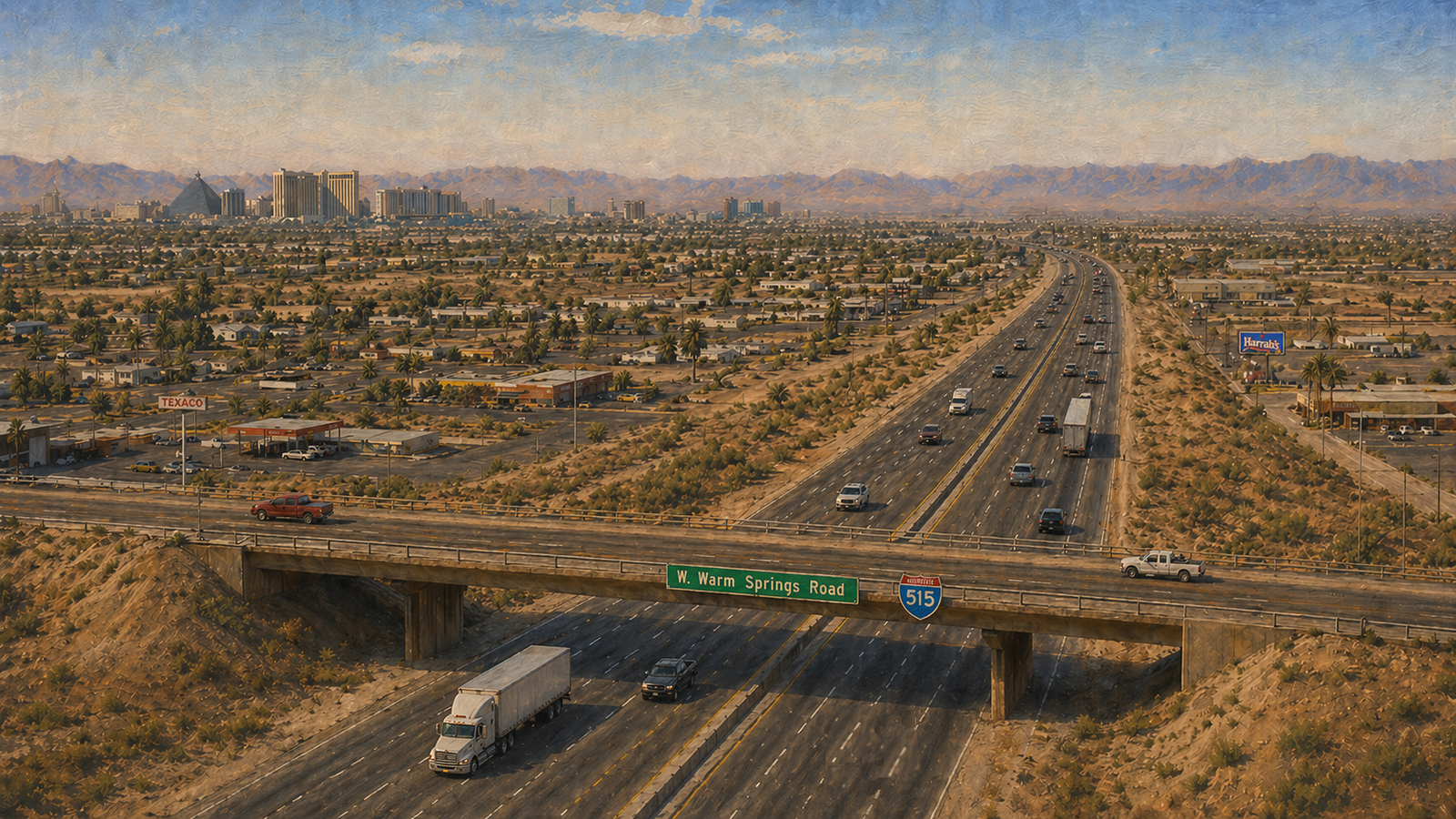
For decades, every long-haul truck entering Las Vegas passed through the same downtown intersection. When a train crossed Fremont Street, every one of them waited. This is the story of how the valley finally broke that chokehold.…
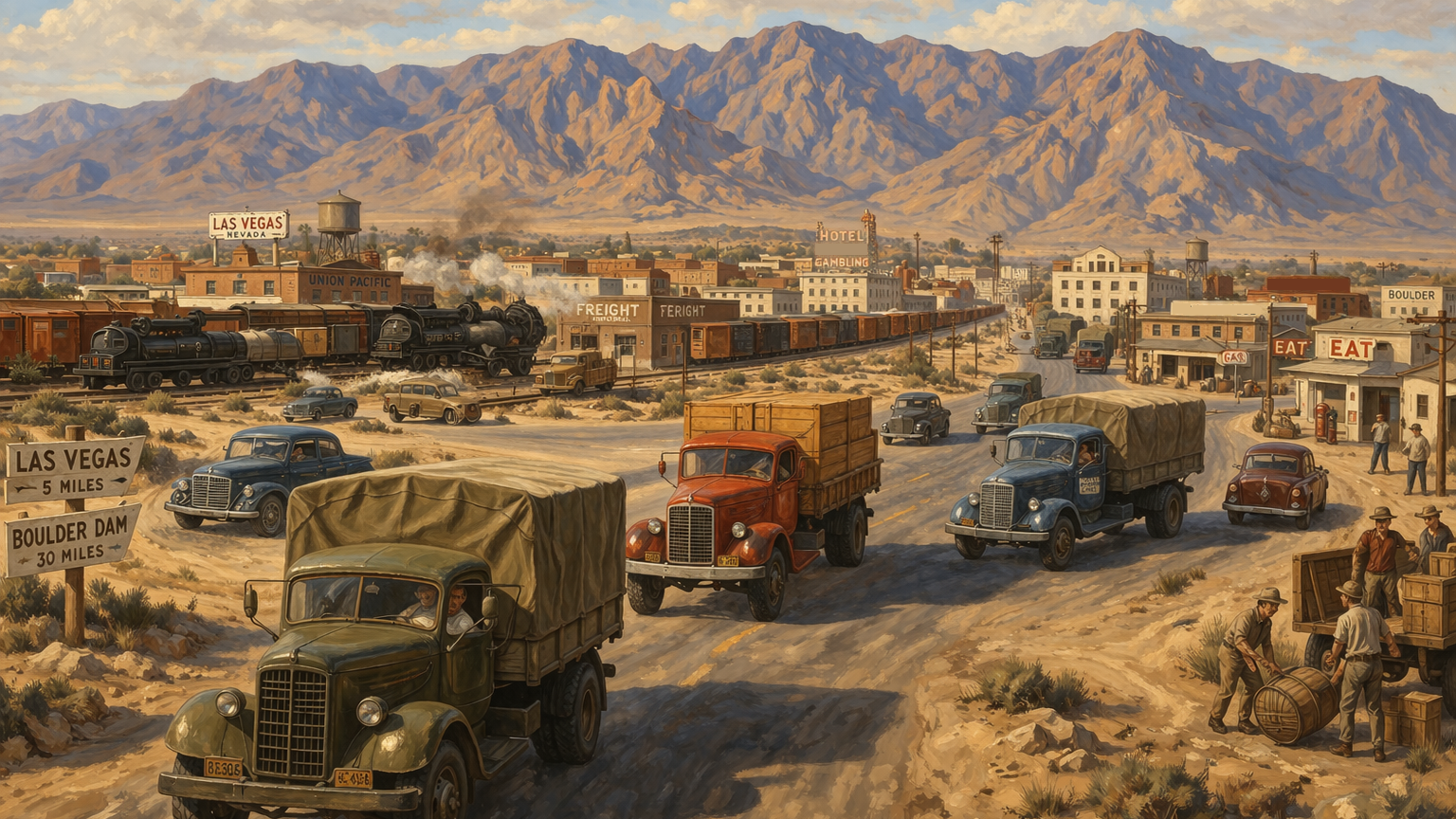
By the mid-1940s, Las Vegas sat at the intersection of two federal highways, a working rail yard, and a street grid that connected them all. U.S. 91, U.S. 95, Boulder Highway, and the downtown grid had begun working together. The valley's single freight corridor had become a network.…
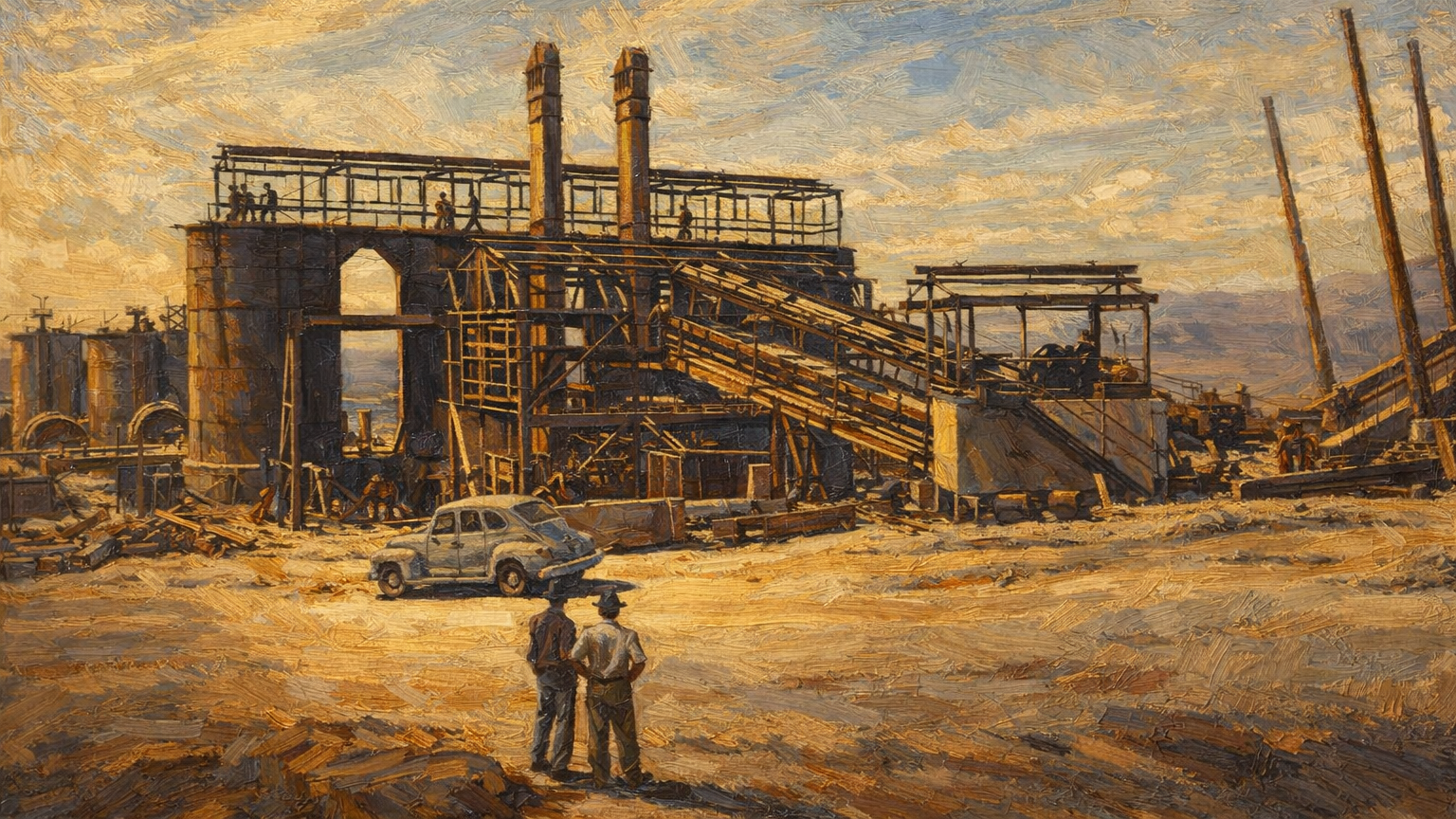
In 1941 the federal government built a magnesium plant in the desert southeast of Las Vegas. There was no town, only power from Hoover Dam, rail access, and a highway corridor. When the war ended, the infrastructure stayed. It became Henderson because the system worked.…
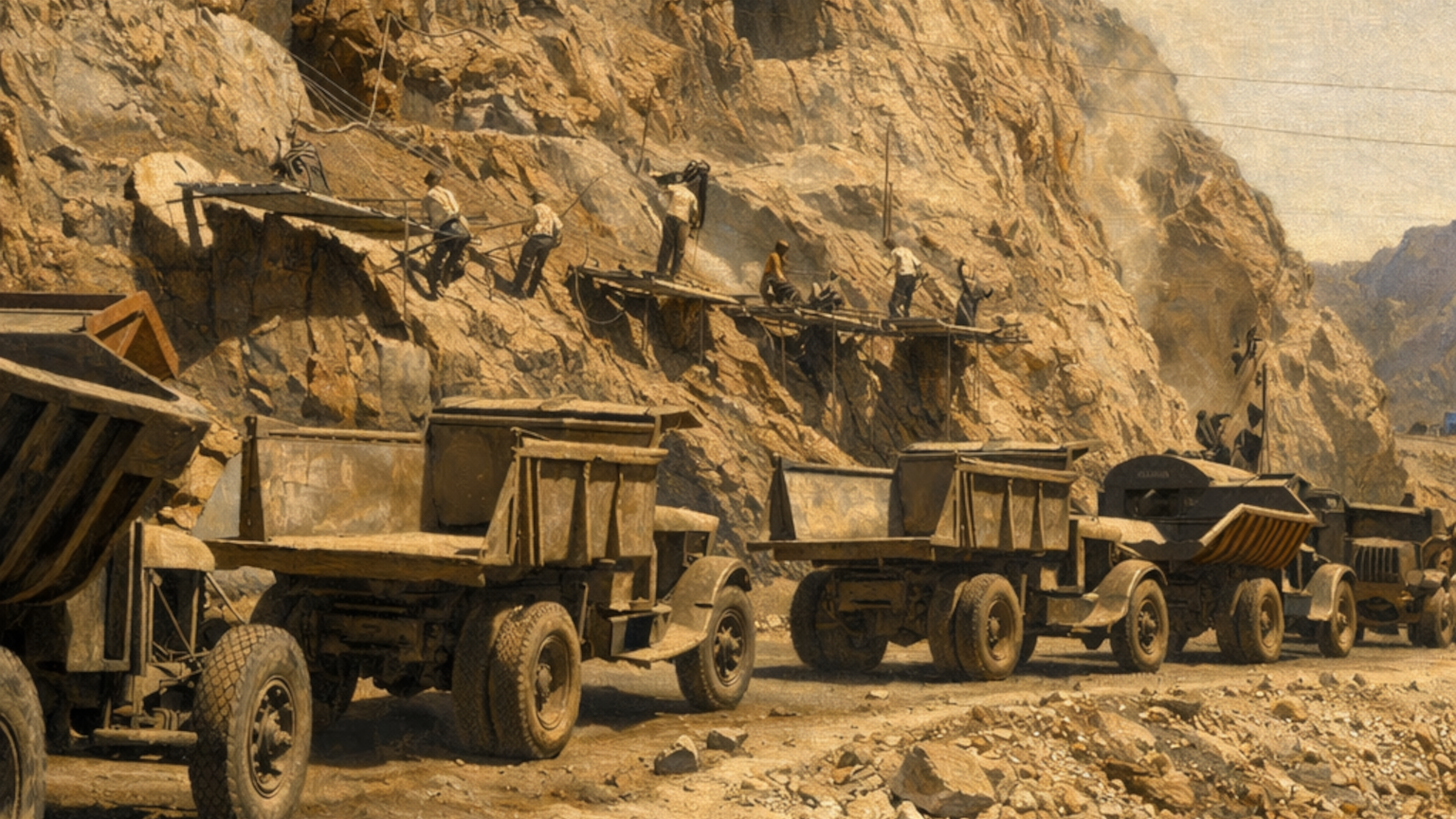
Hoover Dam was completed two years ahead of schedule. Cement, steel, aggregate, and labor moved from a Las Vegas railhead to the bottom of Black Canyon in sequence, on schedule, for five years. The schedule governed everything. The dam stands because the sequence held.…
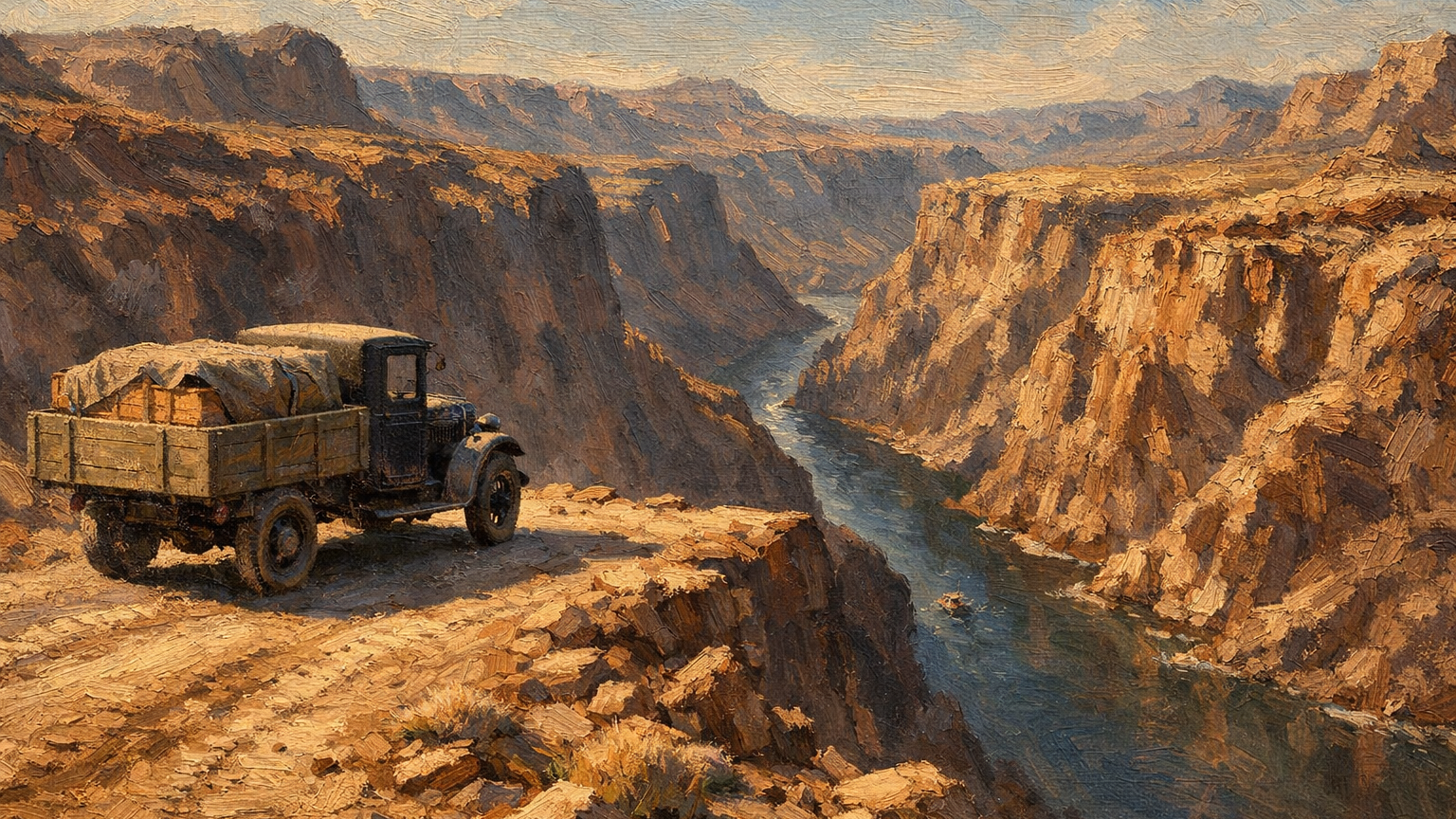
U.S. Route 93 identified a corridor from Las Vegas to Arizona in 1926. On maps it looked complete. On the ground it ended at the Colorado River. The crossing was not an engineering problem. It was a political one. Seven states, two decades of deadlock, and one refusal to sign kept freight stopped at the canyon's edge.…
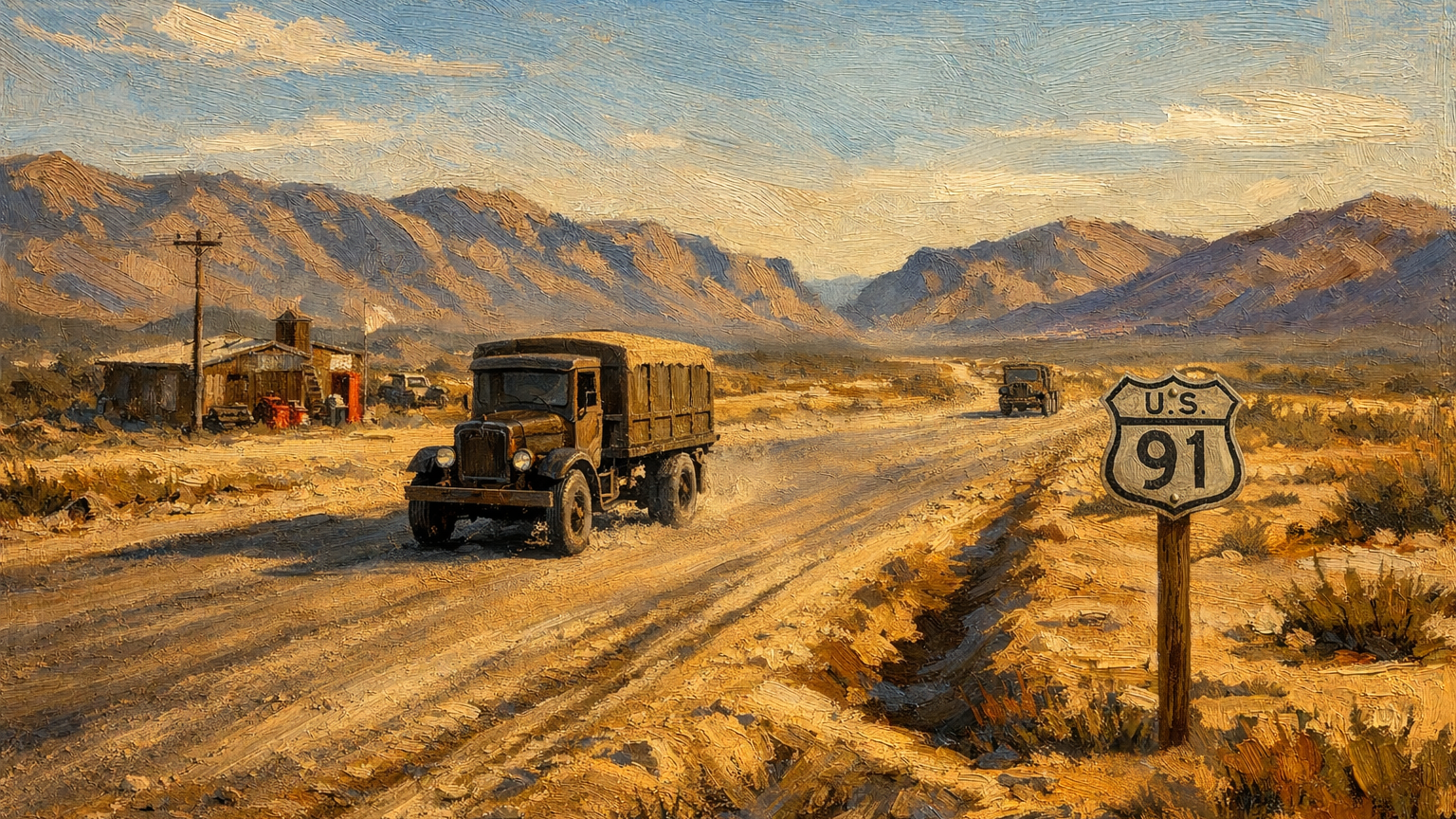
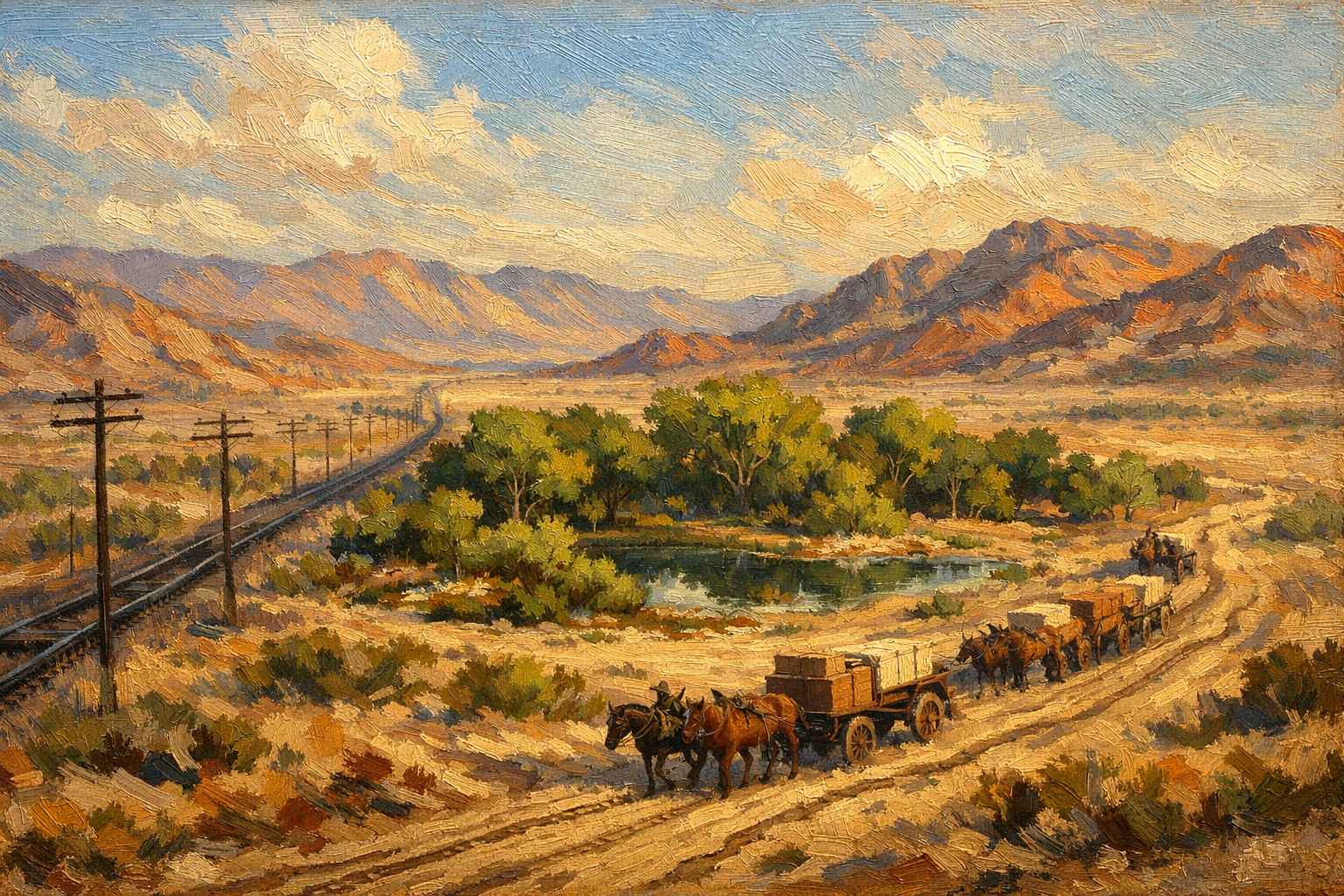
In 1926, U.S. Route 91 gave the desert corridor through Las Vegas an official identity, consistent maintenance, and reliable signage across three states. Regular grading, coordinated standards, and predictable surfaces turned a shifting network of dirt tracks into a scheduled freight route. Las Vegas became a working node on the corridor,…
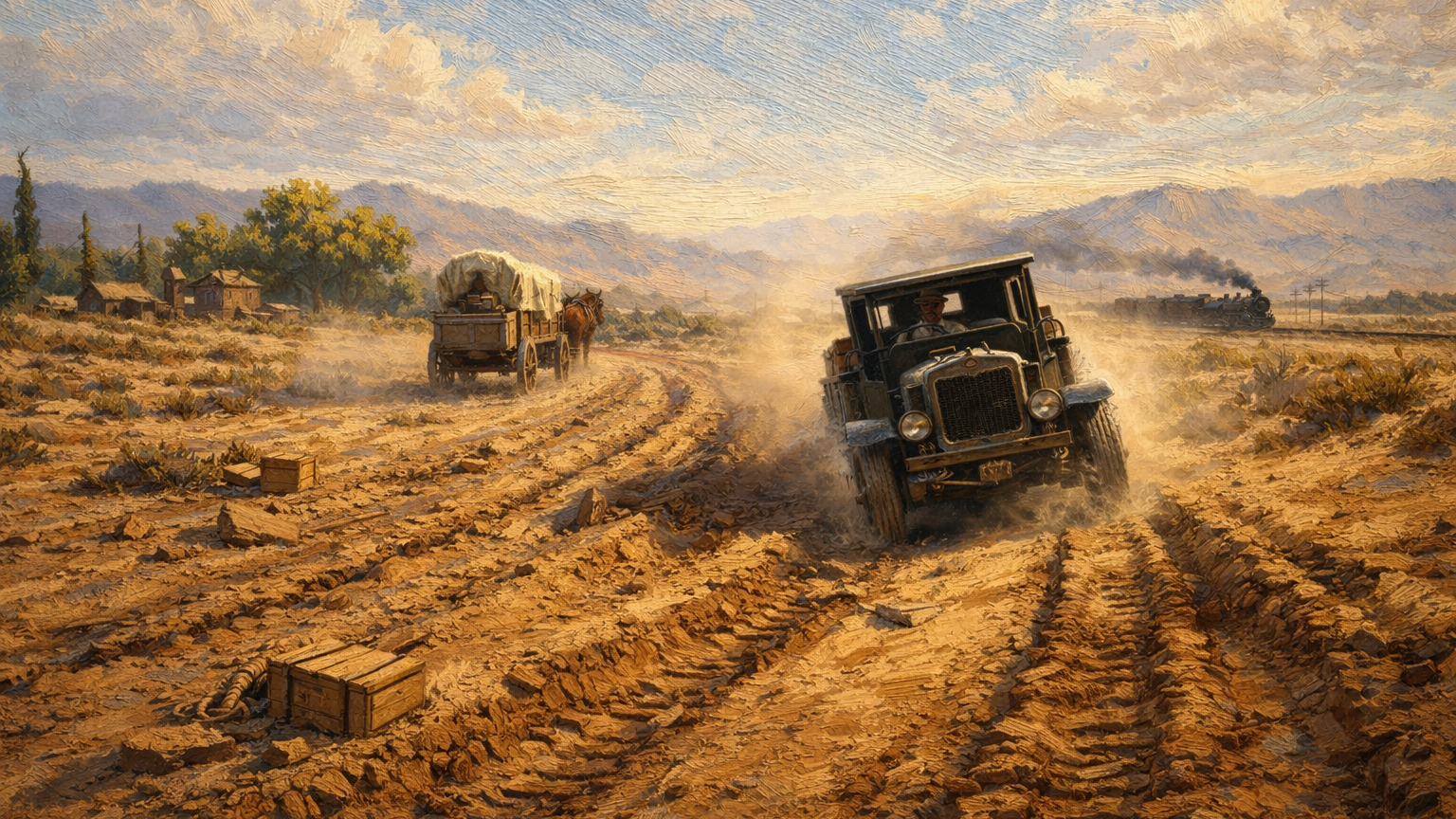
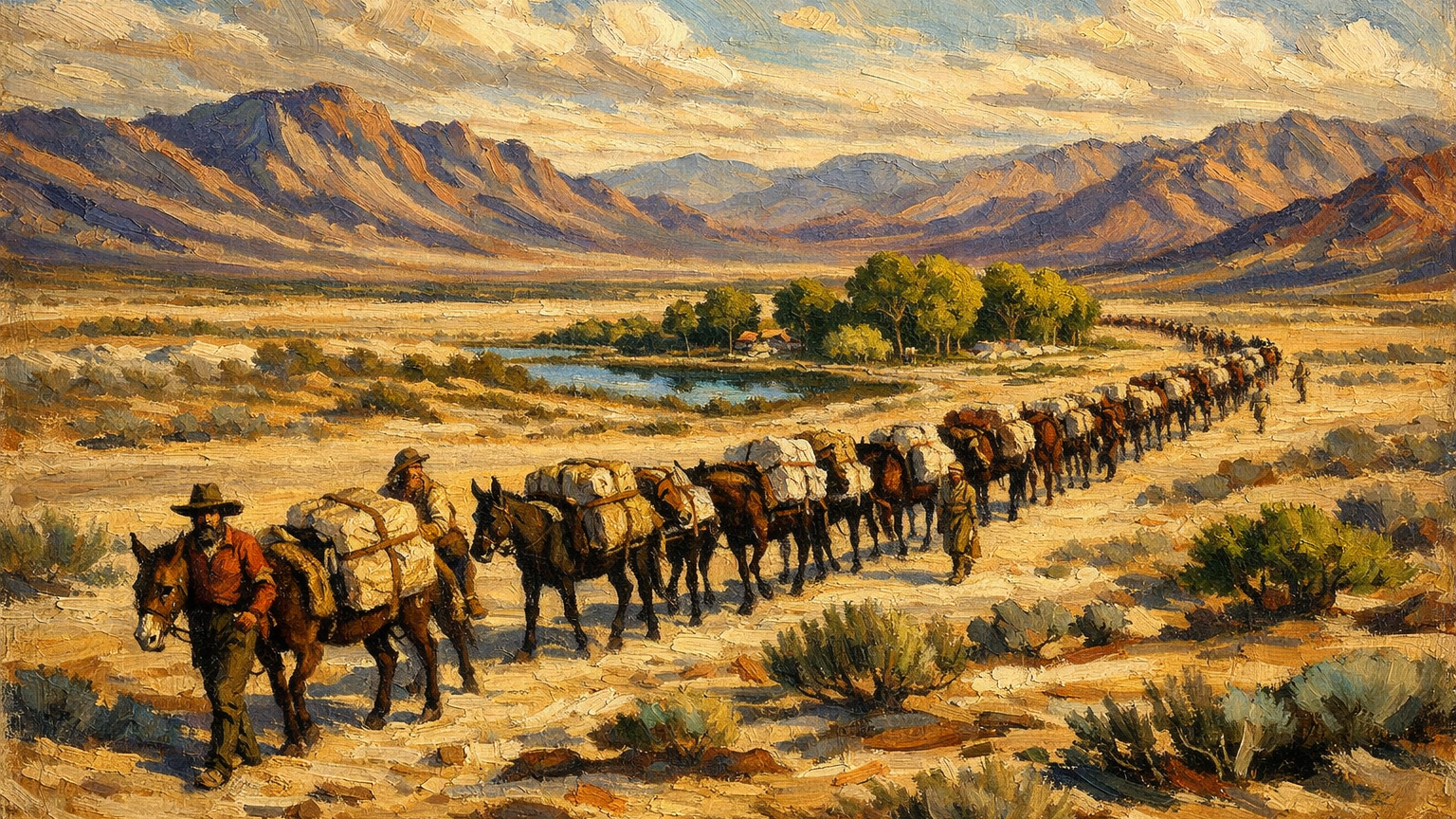
Early motor trucks were unreliable and underpowered. Mule teams knew the road, worked rough terrain, and needed no mechanical attention. They also needed feeding, watering, and rest every day whether they worked or not. Trucks waited for free. The freight corridor through Las Vegas carried both until that difference settled the argument.…
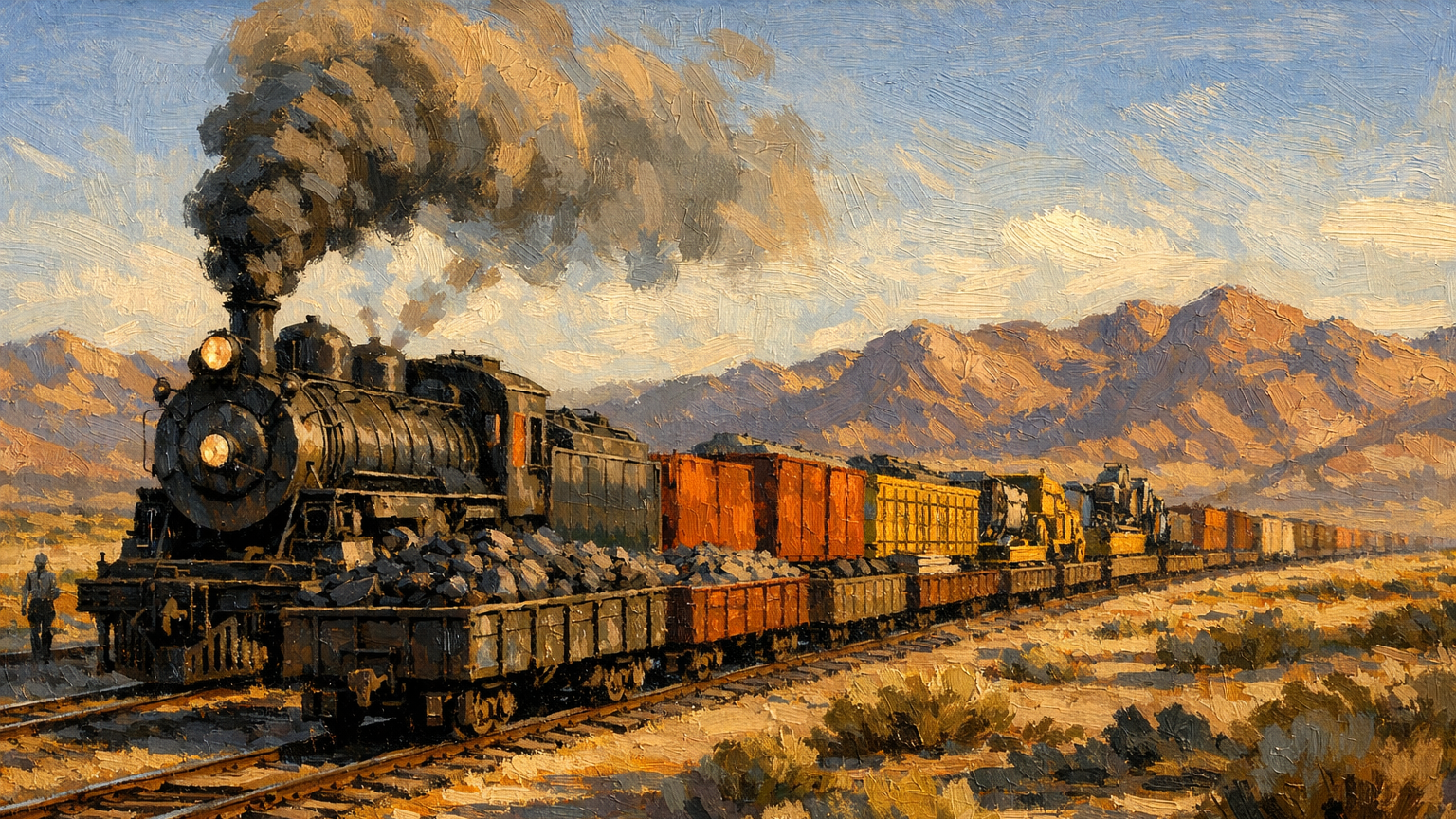
In the nineteenth century wagon freight, military supply trains, and mining traffic turned desert trails into a recognizable overland road through the Las Vegas Valley. The corridor became a working freight route decades before automobiles arrived, laying the groundwork for the highways that would later follow the same path.…
The highway corridors through Las Vegas were chosen by terrain and water, not by engineers. Mountain ranges, manageable passes, and reliable springs determined where desert travel was possible. Mule caravans followed those constraints first. Wagon trains followed the mule caravans. The highways followed the wagons. The landscape made the decision centuries before anyone drew a map.…
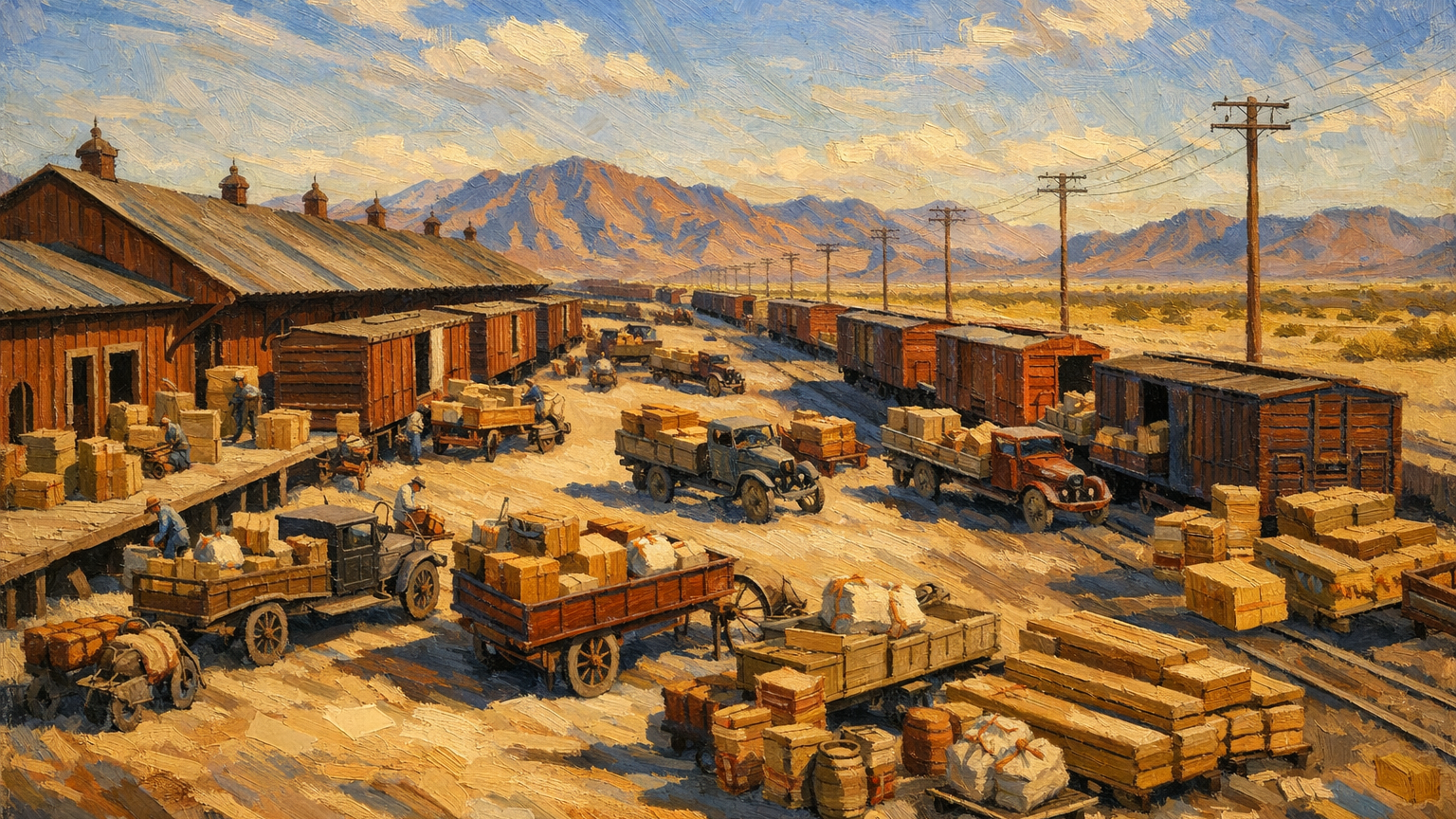
A freight train could cross the desert in a day. Getting a crate of hardware from a railcar to a merchant's shelf in a mining camp took something else entirely. Freight houses sorted the shipments. Team tracks let ranchers and contractors unload full cars themselves. The Las Vegas yard was an intermodal distribution node before the term existed.…
The Los Angeles–Salt Lake line was built to move freight between regions. Mining supplies moved north toward Tonopah and Goldfield. Ore, livestock, and agricultural goods moved south toward California. Las Vegas sat in the middle and handled the exchange. The corridor required that interval. The town existed to fill it.…
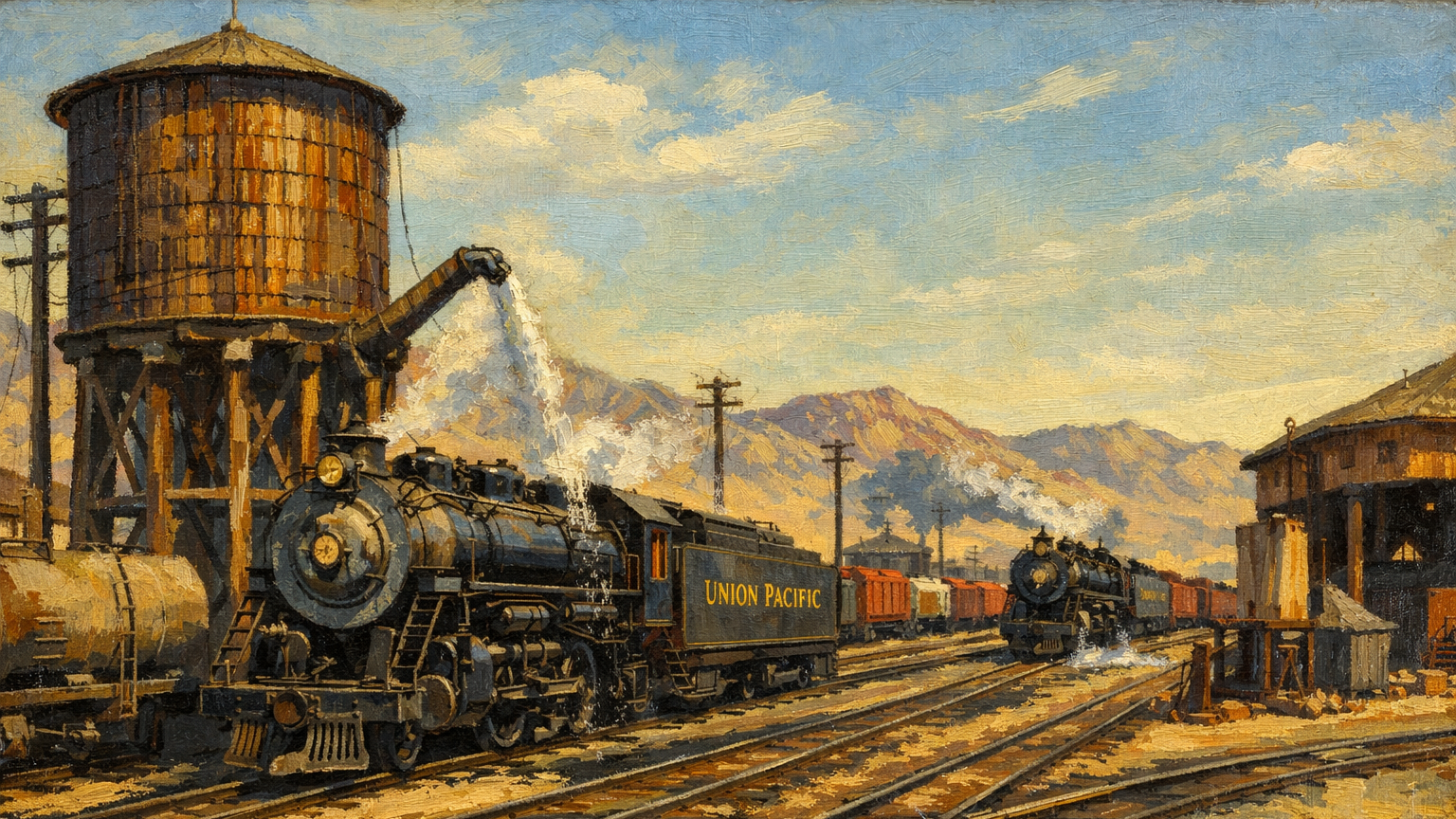
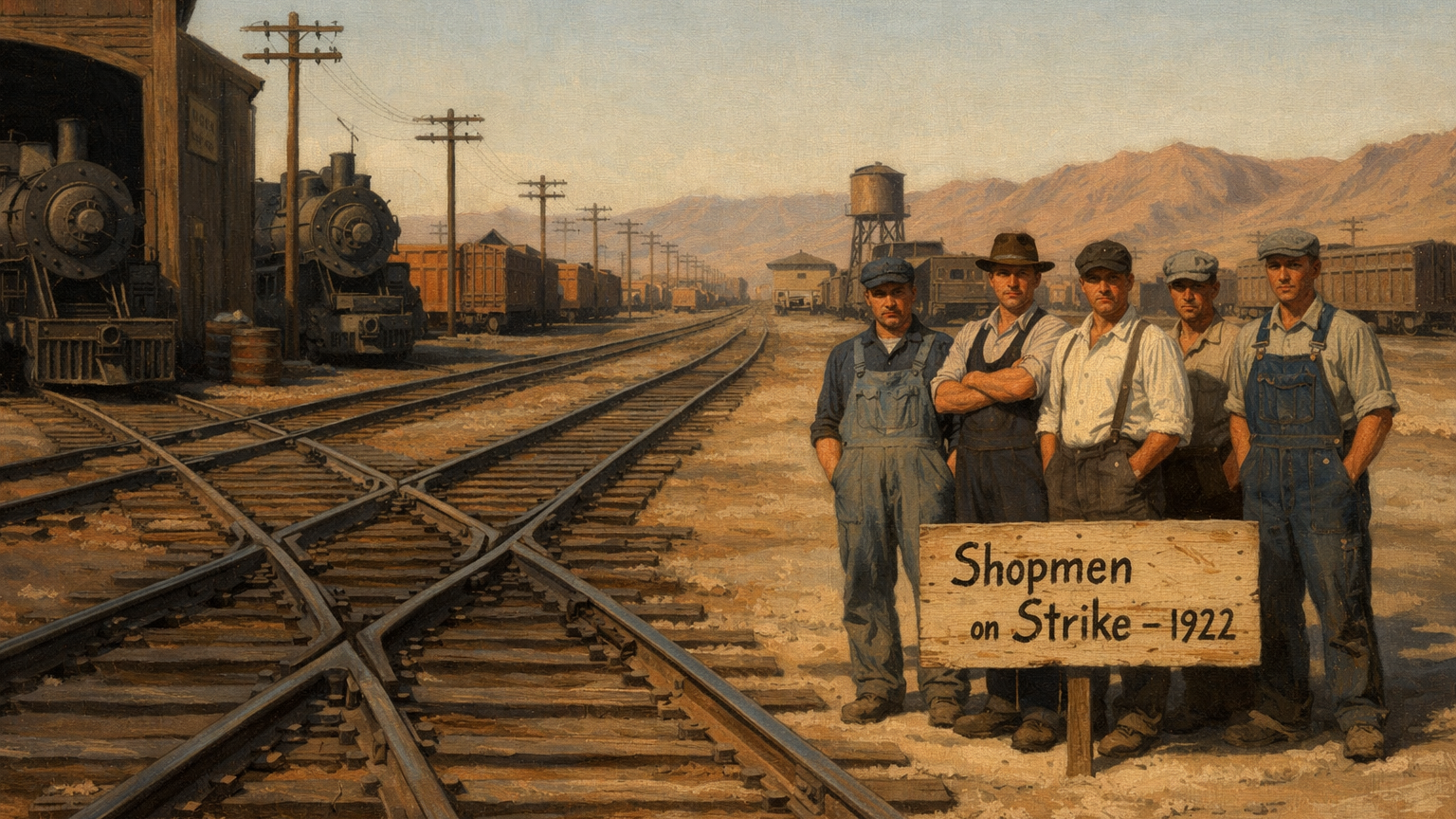
Through the early 1920s, trains arrived at Las Vegas on schedule, locomotives were serviced, and crews were exchanged. The corridor still ran. The first signs of strain appeared as congestion — locomotives waiting their turn, freight cars sitting longer in classification tracks, departure windows narrowing. The design had not failed. The margin inside it was shrinking.…
From 1905 to 1922, Las Vegas operated as a disciplined rail division point built into a regional freight system. This installment traces how that stability was engineered — and how national pressures began to strain it.…
Between 1905 and 1911, Las Vegas had no elected mayor, no city council, and no zoning ordinances. The San Pedro, Los Angeles and Salt Lake Railroad owned the land, the water, and the train schedules. It governed through infrastructure rather than ordinance. The railroad was not governing like a landlord. It was governing like a clock.…
In 1902, Senator William Clark bought the Las Vegas Springs along with 1,800 acres of desert ranch land. He was building a railroad and needed water for locomotives. He also understood that whoever controlled the water controlled the town. A competing developer learned that lesson the hard way. The competition ended not with rhetoric but with plumbing.…
Clark County has 2.41 million residents and is heading toward three million. Visitor spending hit $55.1 billion in 2024. Five to six million square feet of distribution space is coming to the valley in 2026 alone. Las Vegas is booming. The logistics infrastructure behind that boom is the story this blog tells.…